
Website redesign.
Kāpiti Coast and across New Zealand
Someone recommended you last night. They’re looking you up now.
What they find is the site from when the business was smaller, cheaper, or doing different work. It still speaks for you. A redesign is how it starts speaking for the business you run today: the work you want more of, shown the way you’d show it in person, at the price you now charge. Without starting from scratch.
Without starting from scratch.
What it quietly costs
You already know the moments.
The link you send with a line of apology attached.
The referral who was warm on the phone, looks you up, finds a site that argues for the old business, and books whoever made it easy.
The quote you round down a little, because nothing on the site has made the case for the full one.
None of it arrives as a bill.
What a redesign changes
The site does the first part of the selling.
The things your best customers need to see before they get in touch, in the order they need to see them.
A builder’s callback
arrives with the job already described in the homeowner’s own words, and the plans and photographs sent through before the call. The first conversation starts halfway in.
Topp Shelf Building, Waikanae.
Explore the project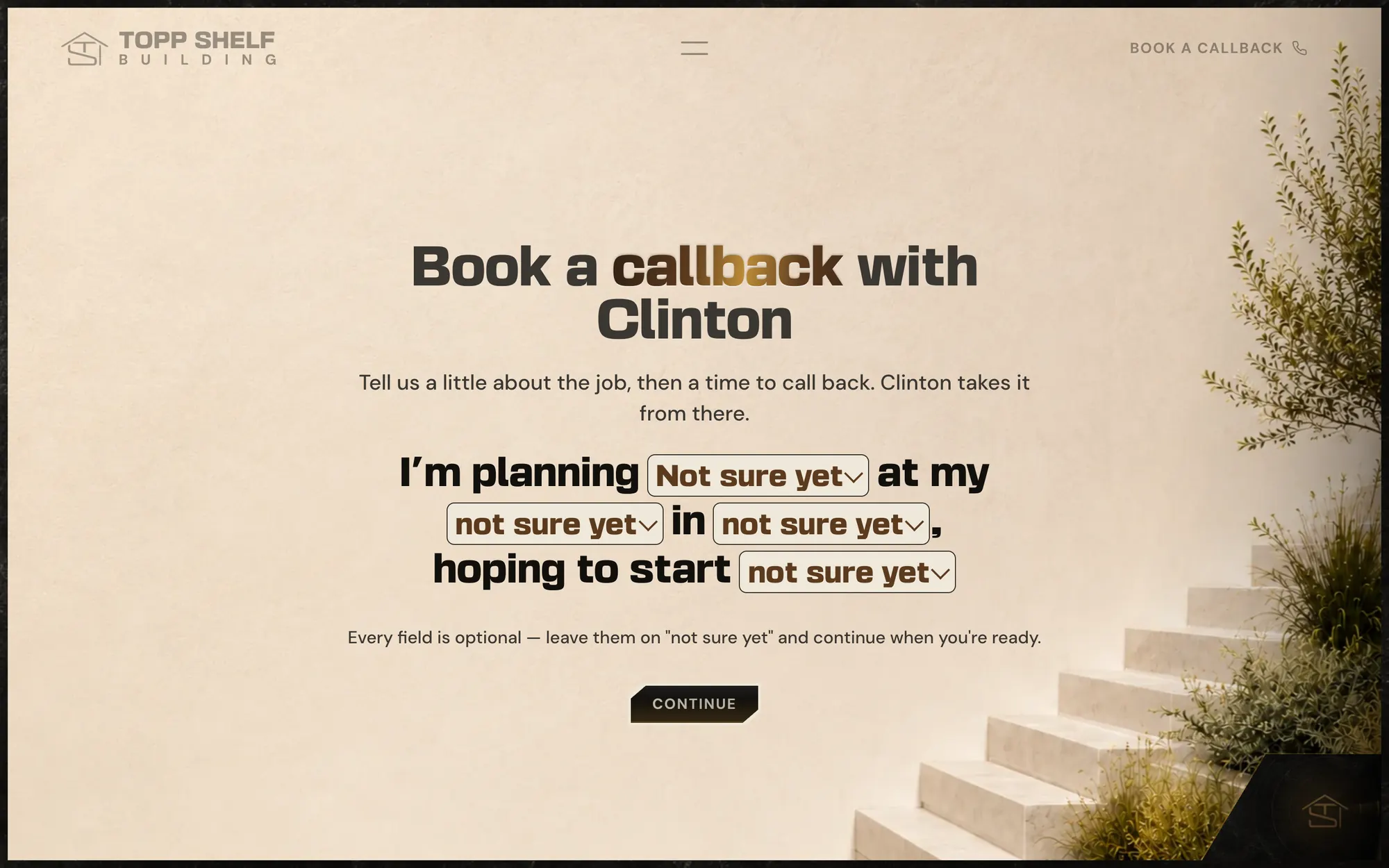

The home page, top to bottom A barber’s cut
is judged from the photographs before anyone books, and the booking goes straight to the diary he already uses. No form in between.
LH Barbershop, Paraparaumu Beach.
Explore the project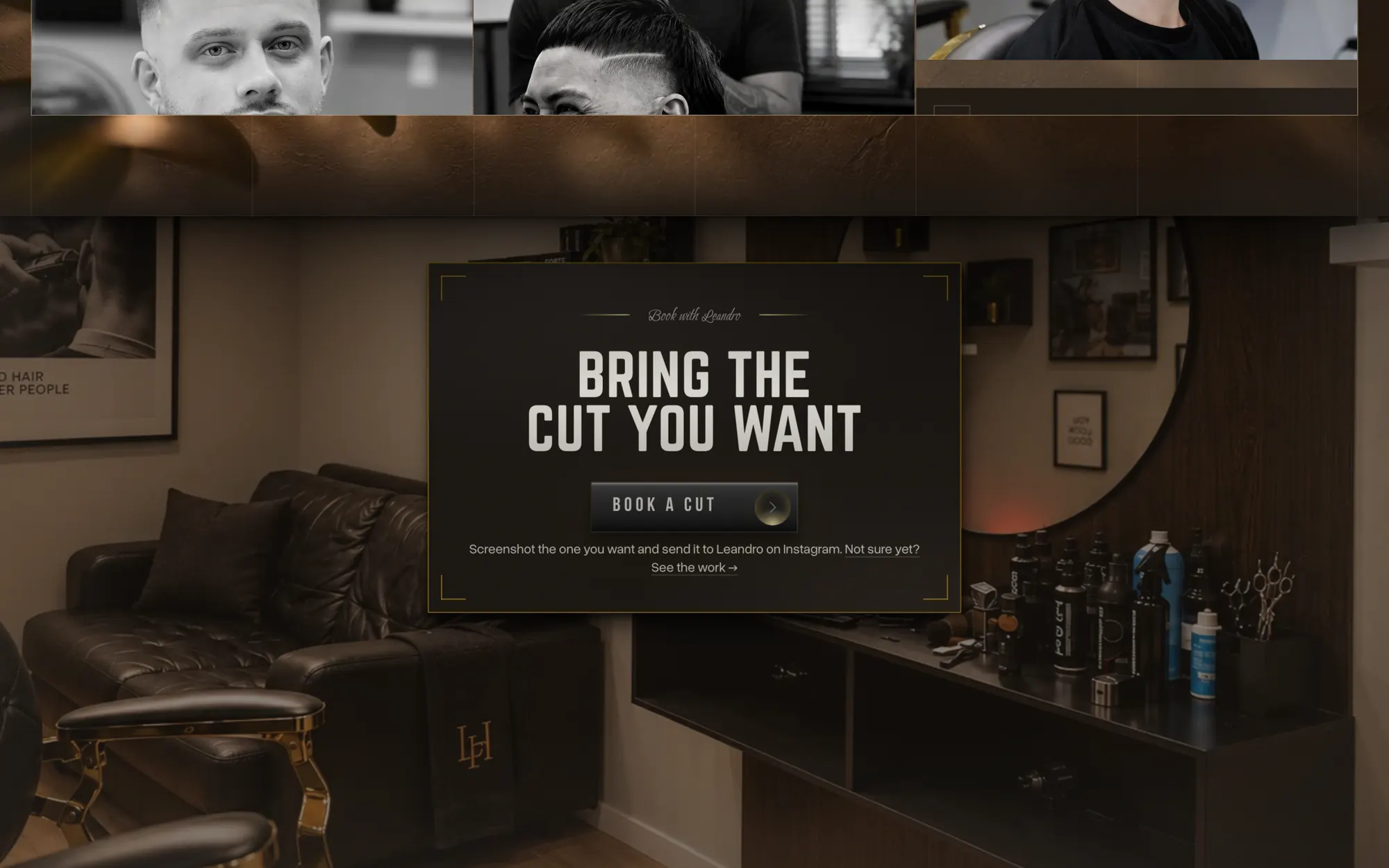

The home page, top to bottomReviews shown are Leandro’s clients’ reviews, published on his site. An artist’s collection
reads like an exhibition rather than a product grid, and the print is one tap from the cart.
Patu Photography.
Explore the project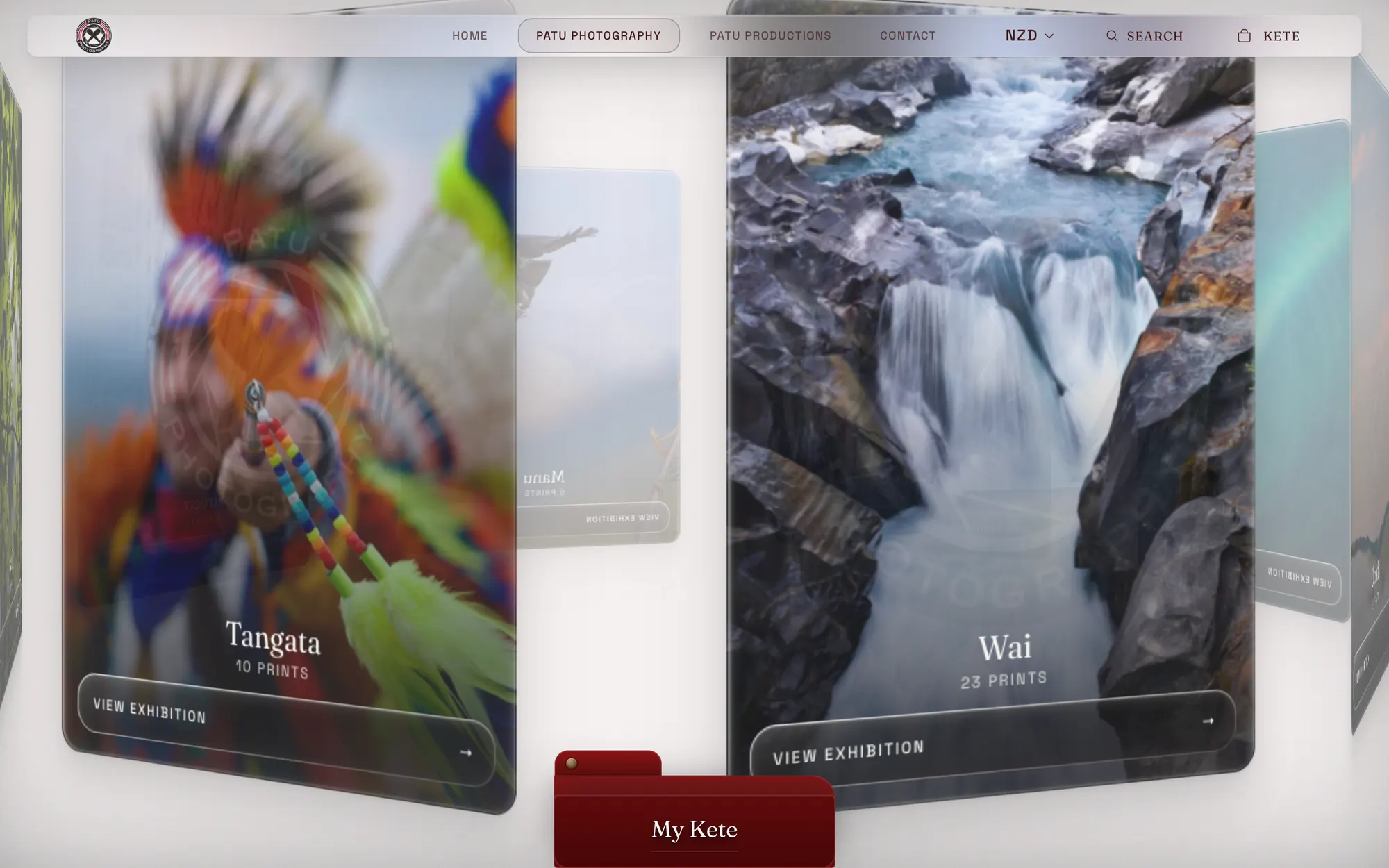
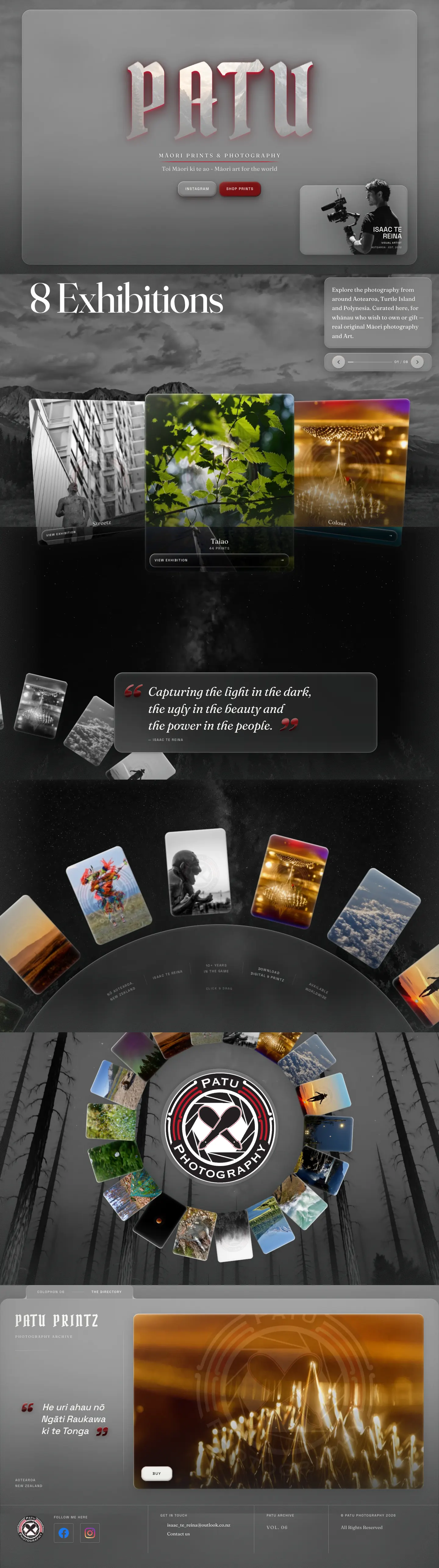
The home page, top to bottom
Yours
is a different business with a different next step. Working that out first is the point of planning before designing.
What carries over
Keep what works. Replan the rest.
Your domain stays yours. Your content is reworked rather than thrown out. Every web address that changes is redirected to its replacement, so what Google already knows about you isn’t lost on launch day. The booking tool you use stays if it works, and so do the other tools you run the business on. When you need more, another tool can connect to the same site.
An illustration
The logos are examples of tools that can connect.

KeptTools you already use
 Cal.comBookings
 StripePayments
 HubSpotCustomer records
 Google AnalyticsVisitor numbers
OptionalAdded when you need them
 MailchimpNewsletters
 SlackBooking alerts
 ZapierAutomation
 NotionShared notes
Already using something else? We’ll look at what you have, check what can connect, and agree on the right approach before any work begins.
A real example
Patu Photography
Sometimes the whole job is an improvement inside what you already have. For Patu Photography I worked inside the Shopify store the artist had built himself, and the checkout stayed exactly as it was.
See what changed at PatuHow that happens
Planned and designed before you’re committed.
I research your market and the customers you want more of, plan the site, and design your homepage before anything is built. You see it on your own screen. If it isn’t right after a round of changes, tell me and I’ll refund everything you’ve paid. You keep the research and the plan.
The proposal carries a fixed price. Anything new is quoted in writing before I start it. If you need a set launch date, I’ll commit to one in the proposal: for every week I’m late for reasons on my side, you get a month of ongoing care free, up to three, and the clock pauses while I’m waiting on you.
You deal with me, Joshua Cleland, from the first question to the final detail. Strategy, design and development come from the same person, so nothing is lost between them.
Is this the right fit?
A good fit if…
You run an established, owner-led business, and the website is behind the business.
You’d rather improve what works than throw it away.
You want to see the direction before you pay for the build.
You’d rather understand the process before the price.
Probably not if…
You’re after the cheapest quote, or a template with your logo on it.
A committee needs to approve every detail.
You want ongoing SEO campaigns, ads or social media run for you. I don’t offer them.
Your site was built elsewhere and only needs repairs. I look after the sites I build or redesign.
How it runsThe C.R.A.F.T. framework
Your redesign, stage by stage.
From the site you have to one that speaks for the business you run today. You approve the direction before the build.

A free 30-minute call about the business you run now and the site that hasn’t caught up with it. What’s working, what isn’t, and whether I’m the right person to help.
Your current site first: what it does well and where it falls short. Then your market, your customers and the sites they’re comparing you with, so the plan rests on evidence.
A written plan for what carries over, what changes and what the site must do. Then your homepage, designed first. You approve both before I build. This is the stage the refund above applies to.
The new site takes shape in a private preview you can open at each milestone. Your content is reworked rather than thrown out, and every word is yours to approve.
Testing, then launch with every changed address redirected and Search Console connected. Then a proper handover: your logins, your documentation and a walkthrough of the editor.
Milestones
The milestones are agreed before work begins.
Every client gets a private portal that shows the current stage and the next step.
Questions
Worth knowing before we talk.
Will I lose my Google rankings?
Not through carelessness. Every address that changes is redirected to its replacement, the business and services are marked up the way Google expects, and Search Console is connected at launch so we can see what Google does with the new site. I can’t promise a position, and I don’t. I can make sure nothing you’ve earned is thrown away.
Do I have to start from scratch?
No. I look at what you have and where it falls short. The answer might be a full redesign, a rework of the pages that matter, better paths to enquiry, or an integration. The work should fit the problem.
What carries over?
Your domain, your content, your photographs, and the tools you already use. What doesn’t carry over is anything that argues for the business you used to be.
Who writes the words?
I write the first draft from a recorded conversation with you, then you change anything that doesn’t sound like you. You’ll be asked for photographs and for the facts only you know. You won’t be asked to write pages.
What does it cost?
The scope comes first. After understanding your business, I put together a fixed-scope proposal with a clear price before any paid work begins, and that price doesn’t change unless you ask for something new. What moves it: how many pages need rethinking, what the site has to connect to, and whether the content exists or needs writing.
Can I change it myself afterwards?
Yes. You get an editor for the words and images that change, with the layout protected so an edit can’t break the page, plus your own login and a walkthrough.
How long does it take?
Smaller projects can take a matter of days and larger builds up to six weeks, depending on scope. The milestones are agreed before work begins, and a private client portal, which every client gets, keeps the current stage and next steps visible.
What happens after launch?
I test the finished site and support it through the launch period. Ongoing care is optional, a next step you can choose rather than a dependency you inherit. If you’d rather take the keys, you get your logins, your documentation and the knowledge to run it.